
From the Screen to the Brain: the neurological effects of porn (Versión en español a continuación)
By: Donovan Kelly
The Facts
Nearly half of all men look at porn weekly, with nearly 80% of men reporting regular consumption of pornography at some point in their life. The average age of first exposure to porn is around 11 years old (2022). Some men have been using and looking at porn for decades. 12 year-olds are given smartphones that can pull up chat rooms, games, websites, image searches, even simply advertisements that lead them to addiction (2023). The amount, ease of access, low cost, and seemingly low consequences of porn have led to a pervasive crisis affecting men, marriages, families, and kids. The lies that porn tells us - “no one will know” “you can hide it” “it’s only one time” are just that, lies.
Porn Hijacks Dopamine
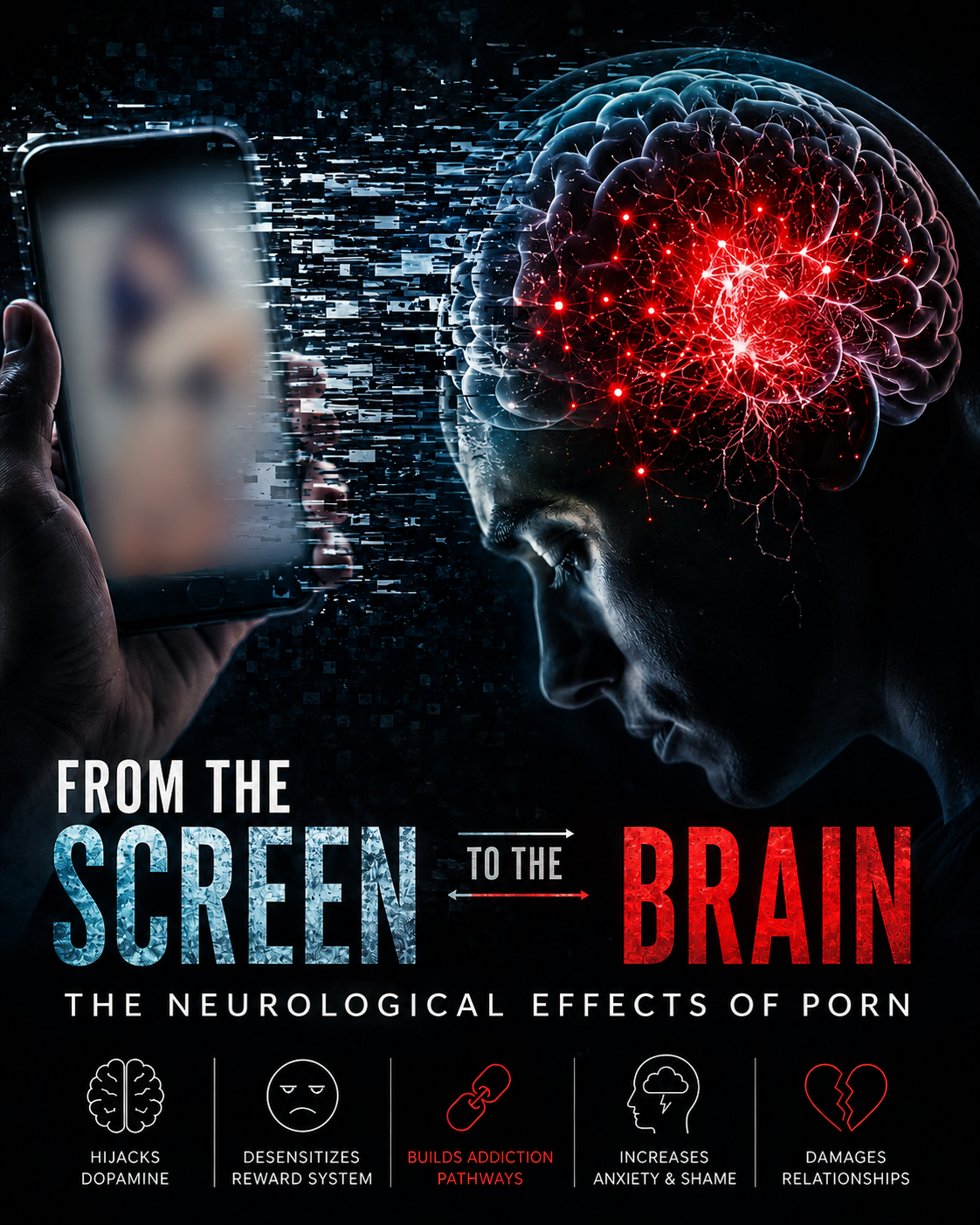
Prolonged exposure to porn and regular porn use changes the brain. When watching porn or having sex, dopamine is produced. Dopamine is a “feel good” chemical that occurs naturally in the brain to reward behaviors. Porn triggers an intense dopamine flooding. Because of easy access to porn, this flooding can be triggered multiple times a day. This artificial surge floods the reward pathway. Recognizing this chronic overstimulation, the brain defends itself by reducing the number of dopamine receptors, which means the same amount of porn will not get the same result, which leads to spending more time on porn or engaging in riskier and riskier behavior (Hilton & Watts, 2011). The turning off of dopamine receptors also inhibits the ability to find joy and pleasure in normally calibrated activities (like sex with your spouse, hobbies, physical exercise, etc). The brain can also suffer from hypofrontality - a decrease in the gray matter and activity of the prefrontal cortex (Kühn & Gallinat, 2014). The prefrontal cortex hosts the decision-making apparatus in the brain, so hypofrontality leads to an inability to stop unwanted behavior, which partly explains why people are caught at work or other extremely inappropriate places looking at porn.
Healing
The good news is that the brain can heal. When porn use has been stopped, the brain resets and the lower levels of incoming dopamine lead to more dopamine receptors turning on. We can find joy and pleasure in everyday activities without resorting to porn (Nestler, 2011). A man who has been struggling to have sex with his wife can be physically intimate again (porn is not always the cause of sexual performance issues but it can be a major block).
What Scripture says
When Christ was asked about adultery, he said: “You have heard that it was said, ‘You shall not commit adultery.’ But I say to you that every one who looks at a woman lustfully has already committed adultery with her in his heart” (Mt 5:27-28). Christ taught that not only what we look at, but how we look at others can be sinful. Porn is focused only on pleasing the self. It puts selfish needs above human connection, above marital obligations, above the natural goal of sex. In John 8:34, Christ asserted that “every one who commits sin is a slave to sin.” The Greek word for “commits” from the Bible is poieōn, which implies a habitual action. The 21st century neurological understanding of the brain confirms what Christ taught 2,000 years ago: addiction will take away your freedom.
Next Steps
Decades-long porn addiction can be defeated. If you have attempted to stop using porn and failed, you do not have to continue the fight alone. You should look for a CSAT therapist, potentially group therapy, and a 12-step group (SA, SAA, SLAA) to have your back while you fight this addiction. If it is ruling your life, you do not have to let it rule you any longer. Do not keep it around. You might be able to stop by yourself, but do not prolong your freedom - get help today.
Sources:
American College of Pediatricians. (2022). The impact of pornography on children [Position statement]. https://acpeds.org/position-statements/the-impact-of-pornography-on-children
Common Sense Media. (2023). Teens and pornography: A national survey on awareness, exposure, and impact. Common Sense Media Reports.
Hilton, D. L., & Watts, C. (2011). Pornography addiction: A neuroscience perspective. Surgical Neurology International, 2(1), 19. https://doi.org/10.4103/2152-7806.76977
Kühn, S., & Gallinat, J. (2014). Brain structure and functional connectivity associated with pornography consumption: The brain on porn. JAMA Psychiatry, 71(7), 827–834. https://doi.org/10.1001/jamapsychiatry.2014.93
Robison, A. J., & Nestler, E. J. (2011). Transcriptional and epigenetic mechanisms of addiction. Nature Reviews Neuroscience, 12(11), 623–637. https://doi.org/10.1038/nrn3111
De la pantalla al cerebro: Los efectos neurológicos de la pornografía
Los datos
Casi la mitad de todos los hombres miran pornografía cada semana, y casi el 80% reporta un consumo regular en algún momento de su vida. La edad promedio de la primera exposición a la pornografía es alrededor de 11 años (2022). Algunos hombres llevan décadas usándola y viéndola. A los niños de 12 años se les dan teléfonos inteligentes que pueden abrir salas de chat, juegos, sitios web, búsquedas de imágenes e incluso simples anuncios que los llevan a la adicción (2023). La cantidad, la facilidad de acceso, el bajo costo y las consecuencias aparentemente bajas de la pornografía han provocado una crisis generalizada que afecta a hombres, matrimonios, familias e hijos. La pornografía nos cuenta varias mentiras: "nadie lo sabrá", "puedo ocultarlo", "es solo una vez", son solo eso: mentiras.
La pornografía escaliviza la dopamina
La exposición prolongada y el uso regular de la pornografía cambian el cerebro. Al ver pornografía o tener relaciones sexuales, se produce dopamina. La dopamina es una sustancia química de "bienestar" que se genera naturalmente en el cerebro para recompensar ciertos comportamientos. La pornografía provoca una intensa inundación de dopamina. Debido al fácil acceso a ella, esta inundación puede activarse varias veces al día. Este aumento artificial desborda la vía de recompensa. Al reconocer esta sobreestimulación crónica, el cerebro se defiende reduciendo la cantidad de receptores de dopamina, lo que significa que la misma cantidad de pornografía ya no dará el mismo resultado. Esto lleva a pasar más tiempo consumiéndola o a involucrarse en comportamientos cada vez más riesgosos (Hilton & Watts, 2011). El apagado de los receptores de dopamina también inhibe la capacidad de encontrar alegría y placer en actividades normalmente calibradas (como el sexo con el cónyuge, los pasatiempos, el ejercicio físico, etc.). El cerebro también puede sufrir de hipofrontalidad: una disminución de la materia gris y de la actividad de la corteza prefrontal (Kühn & Gallinat, 2014). La corteza prefrontal alberga el aparato de toma de decisiones en el cerebro, por lo que la hipofrontalidad provoca la incapacidad de detener un comportamiento no deseado. Esto explica en parte por qué se descubre a personas viendo pornografía en el trabajo u otros lugares extremadamente inapropiados.
La sanación
La buena noticia es que el cerebro puede sanar. Cuando se interrumpe el uso de la pornografía, el cerebro se restablece y los niveles más bajos de dopamina entrante hacen que se enciendan más receptores de dopamina. Podemos encontrar alegría y placer en las actividades cotidianas sin tener que recurrir a la pornografía (Nestler, 2011). Un hombre que ha estado luchando por tener relaciones sexuales con su esposa puede volver a ser íntimo físicamente (la pornografía no siempre es la causa de los problemas de rendimiento sexual, pero puede ser un obstáculo importante).
Que dice la Bibla
Cuando a Cristo se le preguntó sobre el adulterio, dijo: “Habéis oído que se dijo: ‘No cometerás adulterio’. Pero yo os digo que cualquiera que mira a una mujer para codiciarla, ya adulteró con ella en su corazón” (Mt 5, 27-28). Cristo enseñó que no solo aquello que miramos, sino la forma en que miramos a los demás puede ser pecaminoso. La pornografía se enfoca únicamente en complacer al yo. Pone las necesidades egoístas por encima de la conexión humana, de las obligaciones matrimoniales y del objetivo natural del sexo. En Juan 8, 34, Cristo afirmó que "todo aquel que comete pecado, esclavo es del pecado". La palabra griega para "comete" en la Biblia es poieōn, lo que implica una acción habitual. La comprensión neurológica del cerebro en el siglo XXI confirma lo que Cristo enseñó hace 2,000 años: la adicción te quitará la libertad.
Los próximos pasos
Una adicción a la pornografía de décadas se puede vencer. Si has intentado dejar de usar pornografía y has fracasado, no tienes que continuar la lucha solo. Deberías buscar un terapeuta CSAT (especialista certificado en adicción sexual), potencialmente terapia de grupo y un grupo de 12 pasos (SA, SAA, SLAA) para que te respalden mientras combates esta adicción. Si la pornografía está gobernando tu vida, no tienes que permitir que lo siga haciendo. No la mantengas a tu alrededor. Es posible que puedas parar por ti mismo, pero no postergues tu libertad: busca ayuda hoy mismo.
Referencias:
American College of Pediatricians. (2022). The impact of pornography on children [Position statement]. https://acpeds.org/position-statements/the-impact-of-pornography-on-children
Common Sense Media. (2023). Teens and pornography: A national survey on awareness, exposure, and impact. Common Sense Media Reports.
Hilton, D. L., & Watts, C. (2011). Pornography addiction: A neuroscience perspective. Surgical Neurology International, 2(1), 19. https://doi.org/10.4103/2152-7806.76977
Kühn, S., & Gallinat, J. (2014). Brain structure and functional connectivity associated with pornography consumption: The brain on porn. JAMA Psychiatry, 71(7), 827–834. https://doi.org/10.1001/jamapsychiatry.2014.93
Robison, A. J., & Nestler, E. J. (2011). Transcriptional and epigenetic mechanisms of addiction. Nature Reviews Neuroscience, 12(11), 623–637. https://doi.org/10.1038/nrn3111
